Folded Arms to Full Chorus: Winning Round a Skeptical Pub Crowd
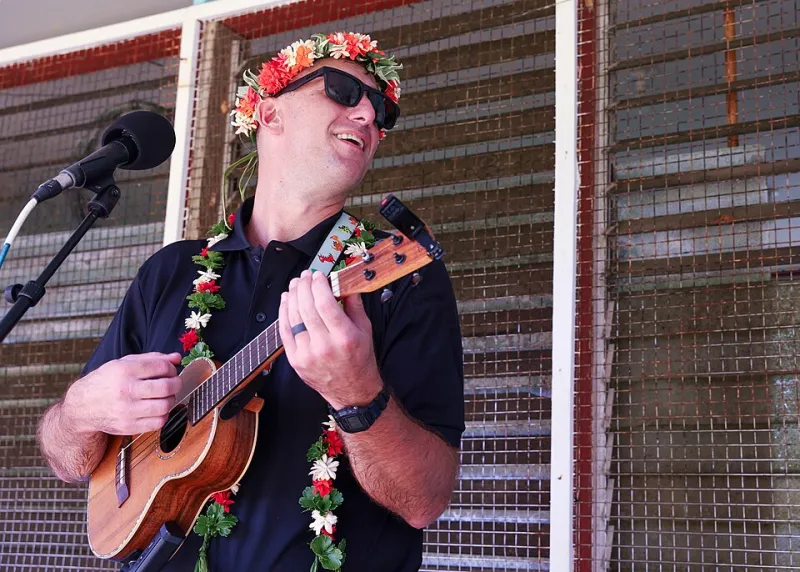
Photo: U.S. Navy photo by Seaman Apprentice Gavin Arnoldhendershot, Public domain, via Wikimedia Commons
The pub gig is a peculiar British negotiation. The audience has not come to see you. They have come for a pint, a chat, and perhaps a bag of crisps. You are the unexpected house guest. The first set is not a performance; it is a request for permission to be liked. Get that wrong and you will spend forty minutes playing to the back of a room that is politely ignoring you. Get it right and someone will be shouting for an encore before the landlord has called time.
The First Ten Minutes Are a Negotiation
The temptation is to launch with your biggest, fastest, most impressive number. Resist it. A skeptical pub crowd needs a way in, not a wall of sound. Start with something recognisable, mid-tempo and friendly. Let the room finish its conversations. Smile at the people who glance over. Do not crank the volume to force attention; that is the musical equivalent of tapping someone on the shoulder repeatedly. A pub crowd is not rude. It is busy. Your job is to become more interesting than the football results, the quiz machine and the couple arguing about whose turn it is to drive.
Pace Beats Panic
Set pacing is everything. Three-song blocks work well: one familiar opener, one upbeat curveball, one song with a chorus the room can borrow. Do not play two slow songs in a row unless you are deliberately trying to clear the room for the smokers. Early on, keep the chat short. The silence between songs is where nerves live. If you fill it with a rambling story about your tuning pedal, the audience will drift. Play, smile, count in the next one. Momentum is a fragile thing and it is built in the gaps.
Banter Is Not a Stand-Up Set
A little self-deprecation goes a long way in a UK pub. One line is enough: we are a ukulele band, yes, all of us, no, we do not know why either. Then play. Do not mock the audience, do not apologise for the songs, and do not explain the joke before you make it. The best pub band banter feels like a chat with the room, not a performance of a chat. If someone laughs, thank them and move on. If nobody laughs, move on faster.
Volume: The Goldilocks Dial
Too quiet and you are background music for a wake. Too loud and you are aggression with a chord sequence. Aim to be heard over the chatter without forcing people to shout. A ukulele band has an advantage here: you can play acoustically if the PA sulks, and you can pull the volume down to draw people in. Dynamics are a secret weapon. A sudden quiet song after three raucous ones can make a room lean forward. Use it. Do not rely on the PA to fix a room that needs a band to read it.
Songs That Build a Room
Recognition is the key. A pub crowd will forgive a lot if it knows the chorus. Mix obvious singalongs with surprising arrangements. A ukulele version of a rock anthem can be funny for thirty seconds, but it only works if the song is played with affection rather than novelty. Put the big familiar chorus in the second half. Early on, win trust with tunes people know and can hum. Later, you can take a few more risks. The ukulele is a Trojan horse for participation: it looks harmless, then suddenly everyone is singing the middle eight.
The Heckle Rule: Do Not Panic
The first heckle is a test. It might be a request, a joke, or a comment about the size of the instrument. Respond lightly and do not engage in a battle of wits with someone who has had three pints and an audience. We will get to that one after this one, mate, is usually enough. If it is rude, smile, keep the song going, and let the room decide who is being reasonable. The audience is watching how you handle it. Fold your arms back at them and you have lost. Laugh at yourself and you have won.
The Second-Half Switch
The interval is your reset button. Come back with slightly more energy and slightly less chat. Play the songs you know will work. If the first half was polite, the second half can be a party. If the room has already started singing, let them. Do not overplay. End with one big singalong rather than an extended solo that shows off your fingers but loses the room. The goal is not to prove you can play. The goal is to make them want you back.
What Bookers Should Know
A pub crowd needs a band that can read the room, so give the band a fighting chance. Do not wedge them in a corner with no light and a speaker pointing at the fruit machine. Give them space, a sensible start time and permission to play acoustically if the electrics complain. Pay them properly. A good pub gig is not a concert; it is a community event with chord changes. The band brings the songs, the pub brings the people, and somewhere in the middle everyone forgets they were skeptical.
Winning over a folded-arms crowd is not about being louder or funnier than the pub. It is about being generous. Give them a tune they know, a laugh they can share, and a chorus they cannot resist. The arms unfold one at a time. Then someone sings. Then the room is yours.