Plink, Plonk, Punk Rock: How the Ukulele Became Britain’s Cheerful Secret Weapon

Photo: vintage George Formby banjolele music hall black and white ukulele history, via i.pinimg.com
The ukulele has a reputation problem. To some, it is a novelty instrument. To others, it is a cheerful little gateway drug to community music. To a certain kind of British entertainer, it is a licence to be mischievous in public. In 2026, the instrument is everywhere from primary school music lessons to wedding receptions and fifteen-second social-media clips. But its place in British entertainment is not a recent accident. It is a long, strange and rather lovely story.
From Seaside Postcards to Music Hall
The ukulele arrived in Britain in the early twentieth century, carried along by a Hawaiian craze that swept through dance halls, seaside piers and variety theatres. It was small, cheap and easy to carry. It looked charming. It sounded like sunshine. And it fitted neatly into a British entertainment tradition that already loved a plucky underdog.
Music hall had taught audiences to enjoy a turn: a comic song, a bit of patter, a performer who could hold a room with nothing more than a wink and a well-timed pause. The ukulele slotted into that world beautifully. It was not grand. It did not need a orchestra pit. It could be strummed on a beach, in a parlour or on a stage while someone told a story. The instrument became part of the broader culture of British amateur music-making: sing-songs in pubs, strum-alongs at clubs, and the sort of family gathering where someone inevitably produces a instrument from behind the sofa.
George Formby and the Long Shadow of the Banjolele
No British ukulele history can dodge George Formby for long. The Lancashire comedian, singer and actor became one of the biggest stars of British cinema in the 1930s and 1940s, and his instrument of choice was the banjolele: a ukulele-sized instrument with a banjo body and a sound that could cut through a dance band. Formby’s songs were cheeky, fast and full of innuendo. When I’m Cleaning Windows, Leaning on a Lamp-post and With My Little Stick of Blackpool Rock became part of the national comic furniture.
Formby matters because he showed that the ukulele family could be funny without being feeble. His stage persona was the underdog who somehow got the better of the situation. He was not a virtuoso in the way classical guitarists were virtuosos. He was a showman with a funny face, a fast strum and a knack for making a room feel like it was in on the joke. That is a very British kind of entertainment, and it left a long shadow. For decades afterwards, the ukulele was associated with novelty turns, seaside holidays and a certain kind of charming silliness.
The Folk Club, the Village Fete and the Quiet Revival
The ukulele never really went away. It turned up in folk clubs, school music rooms, church halls and village fetes. It was the instrument you could learn in an afternoon and bring to a singalong without needing a van. In the 1980s, the Ukulele Orchestra of Great Britain began to change the conversation. Formed in 1985, the group took the instrument seriously enough to be funny with it. They played deadpan arrangements of pop, rock and classical music, dressed in evening wear, and proved that a room full of ukuleles could be both daft and impressive.
That deadpan British irony was important. The ukulele works best when it is not trying too hard. It is inherently a bit ridiculous, and that is its strength. A ukulele player cannot easily be pompous. The instrument is too small, the sound too plinky and the audience too aware that four strings are doing all the work. This is why the ukulele suits punk, comedy and community music in equal measure.
Punk, Pub Nights and the DIY Chorus
Punk was never really about technical perfection. It was about energy, access and the idea that anyone could pick up an instrument and make a noise. The ukulele fits that spirit like a safety pin through a lapel. It is cheap, portable and loud enough for a pub back room. Punk ukulele nights and raucous singalongs have become a small but persistent part of the British live music scene, where the point is not to replicate the record but to get everyone shouting the chorus together.
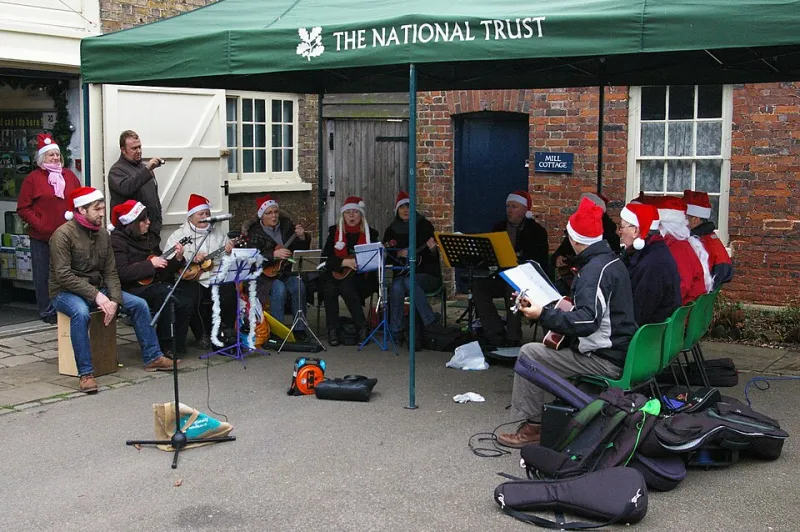
There is something wonderfully British about a room full of people playing three chords and grinning. It is the same impulse that makes a village fete charming rather than embarrassing: the willingness to join in, look a bit silly and enjoy it anyway. The ukulele is the instrument of the group photo, the charity gig, the wedding chorus and the office party. It is not trying to be cool. It is trying to be fun, and that is a more useful ambition.
TikTok, Tiny Cameras and the New Front Room
In 2026, the ukulele has found a new front room: the phone screen. TikTok and Instagram are full of ukulele covers, tutorials, comedy clips and people playing in kitchens, gardens and car parks. The format suits the instrument. A ukulele is visually friendly, easy to film and immediately recognisable. A thirty-second clip can deliver a joke, a song or a small moment of joy without needing a stage.
This has introduced the ukulele to audiences who might never have set foot in a folk club. It has also created a new generation of players who learn by ear, by video and by trial and error. That is exactly how the instrument has always spread: not through conservatoires, but through people showing each other a chord and saying, “Go on, have a go.”
Why Four Strings Fits British Mischief
So why does the ukulele feel so at home in Britain? Partly because it is an underdog instrument. It does not command respect in the way a grand piano does. It has to earn affection. Partly because it suits British humour: self-deprecating, community-minded and happy to look a bit daft in the name of a good time. And partly because it is a social instrument. It invites participation rather than admiration.
That is the spirit we recognise at Ukes of Hazzard. The name is a nod to cheerful trouble, a little bit of Hazzard County mischief with a ukulele in hand. It is not about being the best band in the room. It is about being the band that gets the room singing. Four strings, big grins, singalong fun: that is the through-line from Formby’s fast fingers to a TikTok clip filmed in a kitchen.
The ukulele has survived because it is not precious. It can be funny, punk, folk, silly or sweet. It can be a beginner’s first chord or a comedian’s prop. It can turn a village hall into a chorus and a works do into a memory. And in a country that loves an underdog with a good tune, that is a very British kind of magic.