Commentary, Choruses and the Beer Garden Exit: A Match-Day Ukulele Survival Guide
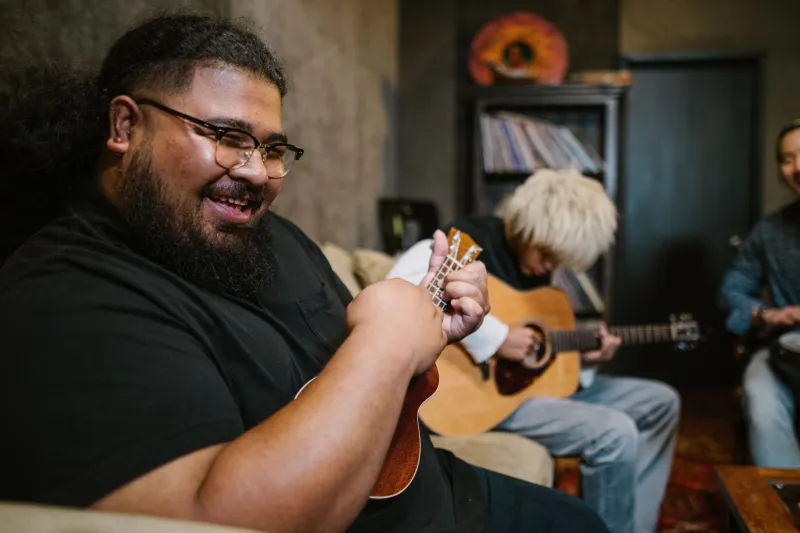
There is a particular look a landlord gives you when you arrive with ukulele cases and he remembers, roughly four seconds too late, that the big match is on. It is not hostility. It is the look of a man doing arithmetic: beer sales, screen glare, seating, and the possibility that a cheerful four-string rendition of something from the 1960s might collide with a penalty shootout. Your job is to make that arithmetic work.
First, Ask the Landlord the Unglamorous Questions
Before you unpack a single soprano, get the fixture details. What time is kick-off? Is it on the main screen or the small one above the fruit machine? Will the commentary be on, or is the pub going for the silent-but-tense approach? Is there a function room, a conservatory, or a beer garden where a ukulele can breathe without competing with a wall of punditry?
Ask when the landlord actually wants music. Some pubs want a pre-match set to build atmosphere. Some want half-time only, because the regulars treat the interval like a sacred 15-minute window for chips and tactical complaint. Some want you to start after the final whistle, when the result has settled and the room is either euphoric or quietly staring into its pint. A scribbled note on a beer mat counts as a contract in this business. Get the timings clear.
Read the Room Before You Tune
Arrive early and conduct a scouting mission. Count replica shirts. Note the number of people staring at the screen with the intensity of a bomb-disposal expert. Listen for the pre-match chatter: is it hopeful, nervous, or the resigned murmur of fans who have seen this film before?
If the room is already glued to the build-up, do not launch into a full set as if you are the main event. Set up quietly, keep the chat minimal, and soundcheck like a polite ghost. A ukulele can cut through conversation surprisingly well, but it cannot cut through a last-minute equaliser. Nobody remembers the band that drowned out the goal. Everybody remembers the band that read the room.
The Golden Windows: Pre-Match, Half-Time and Full-Time
The pre-match window is your friend. Thirty to forty minutes before kick-off, people are still willing to be entertained. Lean on upbeat, familiar songs with choruses that arrive quickly. Do not open with a ten-minute folk epic about a canal. You have roughly the length of a pint to convince the room that you are a pleasant addition to the afternoon.
Half-time is a different animal. You have perhaps ten or twelve minutes, and the crowd is distracted, queueing, or arguing about the first half. Keep it tight. Two or three numbers, no long introductions, no emotional ballads. If the match has gone to extra time, be prepared to be flexible. The phrase ‘we will just do a couple more’ should be used sparingly and with genuine awareness of the score.
After full-time, the mood dictates everything. A win means you can ride the goodwill with something celebratory. A defeat means you should pack down with dignity and perhaps play something gently uplifting in the beer garden, well away from the post-mortem. Do not attempt a rousing singalong at a table of grown adults contemplating a 4-0 home defeat. There is a time for Riptide and a time for retreat.
Volume: Audible, Not an Act of War
A ukulele band does not need to be loud to be heard, but it does need to be sensible. Use small amps if you must, point them away from the television, and keep the low end tidy. If the pub has a hard floor and a low ceiling, you will discover new and exciting ways to create feedback. Resist the temptation to turn up simply because the commentary is turned up. Your job is soundtrack, not siege.
If the landlord is happy to dip the commentary slightly during your half-time spot, wonderful. Do not demand silence. Do not ask for the match to be turned off. That is not a negotiation; that is a declaration of war in a building full of people who have waited all week for this.
Setlist Surgery: Songs That Survive a Wall of Commentary
Choose songs with big, obvious choruses and short intros. Football crowds are trained to respond to a tune quickly, but they are also trained to ignore anything that requires homework. Familiar is not the same as lazy. A well-known song played with charm and a bit of bounce will do more than a clever obscurity delivered with a pained expression.
Keep banter brief. A quick joke about the match is fine; a five-minute monologue about the artistic merits of the ukulele is not. If you sense the room turning back to the screen, wrap up the song and reset. Have an emergency medley ready: something singable, something cheerful, something that does not require the crowd to know the verses. And if someone requests Wonderwall, decide in advance whether you are the kind of band that says yes. There is no correct answer, but there is a correct volume.
The Riptide Rule
Riptide is a useful friend and a terrible master. Play it when the crowd is singsong, when the match is paused, or when the landlord gives you the nod. Do not play it during a penalty shootout. Do not play it while a group of fans are delivering a detailed tactical lecture to someone who did not ask. Do not play it as a passive-aggressive response to a room that would rather watch the football. The beer garden is not defeat; it is a strategic second stage. A small acoustic set outside, for the people who came for the music, the kids, and the dog, can be the most charming part of the day.
Winning Over the Football-First Crowd
Do not mock the football. Acknowledge it. Say you know the match matters, that you will be here at half-time, and that the TV has priority. Then be good-natured, brief and musically reliable. If they sing along, you have won. If they do not, you have at least provided a cheerful interval and not ruined anybody’s afternoon.
After the final whistle, thank the landlord, count the tips, and make a note of what worked. A pub that remembers you were flexible will book you again. Four strings, one screen, no casualties — that is a successful match-day gig.